Retrofit Insulation
Add new insulation to your existing attic or walls after the sealing work is done for the full thermal benefit.
Learn more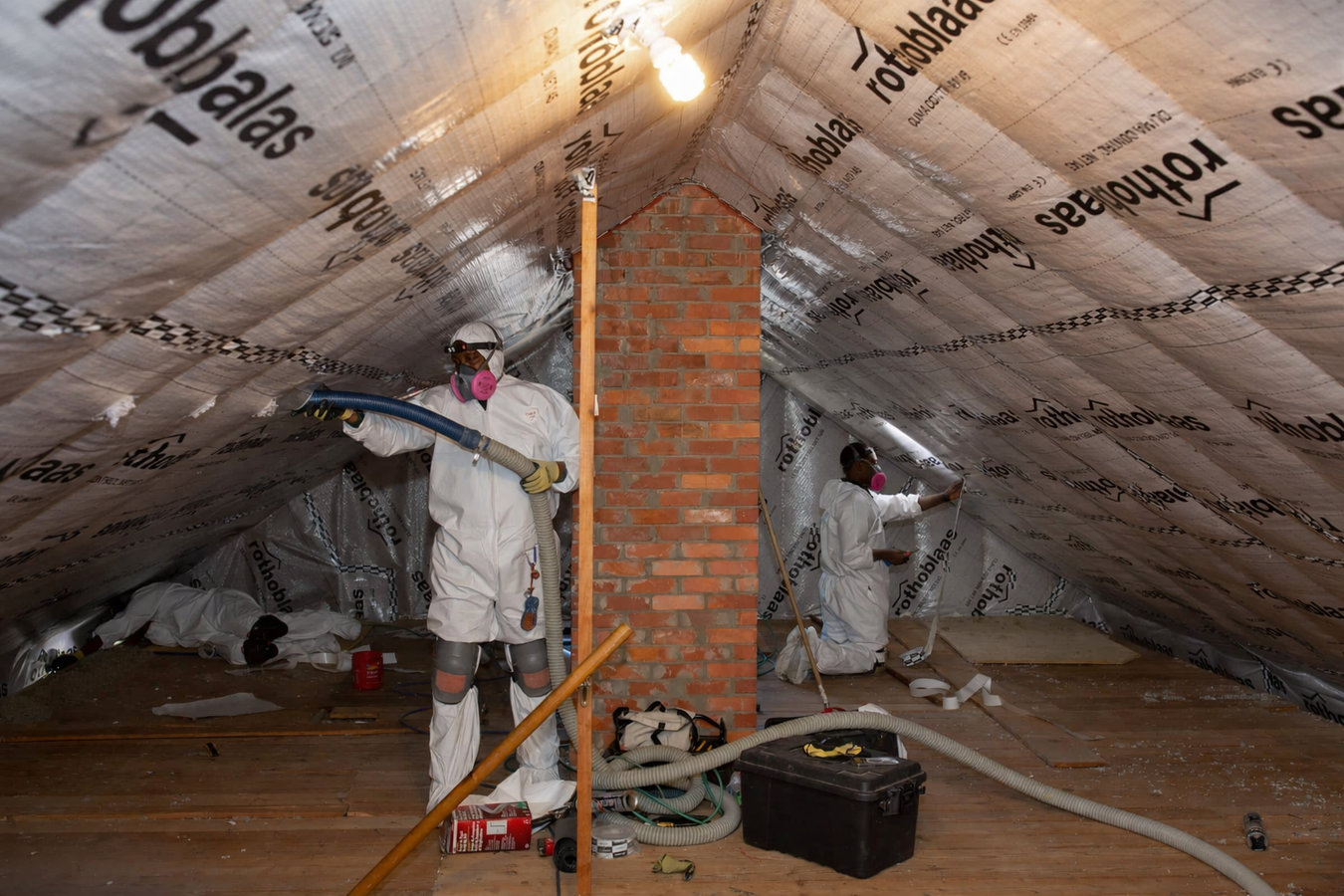
Gaps in your attic floor let conditioned air escape and hot attic air push back in. Sealing them is the most direct way to cut your cooling costs through Florence's long summer.
Gaps in your attic floor let conditioned air escape and hot attic air push back in. Sealing them is the most direct way to cut your cooling costs through Florence's long summer.
Attic air sealing in Florence, SC closes the gaps, cracks, and penetrations in your attic floor that let conditioned air escape and hot outside air push back down into your living space - most standard homes are completed in a single day. Insulation alone cannot stop air movement through gaps; sealing has to come first. Florence homes built before 1990 routinely have dozens of unsealed openings around recessed lights, plumbing stacks, and interior wall tops that have never been addressed since the house was framed.
Most Florence homeowners reach us after their cooling bills have crept up year after year, or after noticing that bedrooms directly below the attic stay a few degrees warmer than the rest of the house. Attic air sealing in Florence addresses the source of that problem rather than running the AC harder to compensate. For homes that also want to boost the insulation layer on top of the sealing work, our retrofit insulation service pairs directly with this work to deliver the full benefit of a tighter building envelope.
Bedrooms or rooms directly below the attic that stay several degrees warmer than the rest of the house - even with the AC running - are a classic symptom of air leaking from the attic into the living space. Hot attic air presses through gaps in the ceiling and raises the temperature in the rooms beneath. In Florence's summer climate, this makes certain rooms nearly impossible to keep comfortable without running the system harder than it should ever need to run.
If your electric bills in June, July, and August feel out of proportion to how much you are actually using the AC, air escaping through the attic ceiling is a likely cause. Florence's long, intense cooling season - which can run from April through October - means this problem shows up on your bill for five or six months of the year. If neighbors in similarly sized homes are paying noticeably less, that gap is worth investigating with an energy assessment.
Gaps in the attic floor do not just let air through - they carry whatever is in the attic with it, including dust, insulation particles, and outdoor air loaded with pollen. If you notice dust accumulating quickly around ceiling light fixtures or detect a musty odor when the AC kicks on, attic air leaks are a likely contributor. Florence's high spring and fall pollen counts make this particularly noticeable for households where anyone has allergies.
Standing near your pull-down attic stairs or attic hatch on a hot summer day and feeling warm air coming down through the edges is a direct sign of one of the most common air leak points in any home. The area around the attic access is consistently one of the largest single air leak spots in older Florence homes, and it is also one of the quickest to fix when a contractor addresses it properly with foam and weatherstripping.
We seal attic floors throughout Florence County using the right material for each type of opening - two-part spray foam for larger gaps like dropped soffits and wall top plates, caulk or acoustical sealant for smaller gaps around wires and pipes, and rigid foam board with fire-blocking foam for areas around chimneys or high-heat zones. Larger openings around old chimney chases and dropped kitchen soffits need rigid materials that also resist heat - not just a bead of caulk. According to the U.S. Department of Energy, the biggest air leaks in most homes are at the tops of interior walls, around recessed light cans, and at plumbing and wiring penetrations - all spots we address on every job. Our air sealing services extend this work to walls, rim joists, and other areas of the building envelope beyond just the attic floor.
We use a blower door test before and after every job. That test gives you a real number showing exactly how much tighter your home has become - not just a promise that the work was done. We will walk you through the results and show you photos from inside the attic before we leave. For homes where the insulation layer on top of the attic floor is also thin or uneven, our retrofit insulation service can be completed the same day or scheduled as a follow-up so the two projects work together.
Best for homes where cooling bills are high and rooms below the attic run warm - addresses all major penetrations in one visit.
Best for homes where the attic access point has never been weatherstripped or insulated - one of the quickest wins available.
Best for homes where the attic floor is both leaky and under-insulated - sealing and topping up insulation in the same visit delivers the full benefit.
Best for homeowners who want to understand where their home is losing energy before committing to any specific scope of work.
Florence sits in NOAA Climate Zone 3A, where summer temperatures regularly climb into the mid-90s and humidity stays high for five to six months of the year. That combination means your attic temperature on a July afternoon can reach 140 degrees or more - and if your ceiling has gaps, that heat is working its way into your living space all day long. Unlike homeowners in the Northeast who think of air sealing as a way to stay warm in winter, Florence homeowners see most of their return through lower cooling costs during the long humid summer. The older brick ranch homes in neighborhoods like Timrod Park and West Florence were built in an era when builders gave little attention to attic penetrations, and most have never had this work done.
The Florence housing stock adds another layer of complexity: homes built in the 1960s and 1970s often have original wiring runs and plumbing stacks that pass through the attic floor at multiple points, each one a potential air leak path. Homeowners in Darlington and Hartsville face similar conditions, with comparable housing ages and the same Climate Zone 3A summer heat. The South Carolina State Climatology Office documents the region's cooling load patterns, and the data supports what we see in homes here every season: air sealing delivers its biggest return in climates where cooling dominates the energy calendar.
We will ask a few basic questions - home age, what you have been noticing, whether any insulation work has been done before. You will hear back within one business day. Spring fills up quickly for this work, so calling early in the season gives you more calendar flexibility.
Before any work begins we walk through your attic to see where the major gaps are and check for moisture or ventilation issues that need to be addressed alongside the sealing. We run a blower door test at this stage so you have a baseline number to compare against after the job.
The crew works entirely in the attic, moving methodically through each gap and penetration. You can stay home. You may hear some noise from above and briefly notice a smell from the foam materials - this fades quickly with ventilation. Your living space stays clean and undisturbed throughout the day.
Once the sealing is done we run a second blower door test to confirm the home is measurably tighter. We walk you through what was sealed, show you photos from the attic, and explain what to expect in comfort and energy savings. Your home is ready to use immediately - no curing period needed.
We will assess your attic, run a blower door test, and give you a written quote - no pressure, no obligation.
(854) 204-1707We measure air leakage before and after every project - not just on the jobs where we feel like it. That before-and-after number is the only objective proof the work was done. You leave with documentation you can reference for future work or when you sell the home.
We pull every permit that is required and work to the Florence County building code - so the job is inspected and on record. When the work is done, you have documentation of exactly what was sealed and how, ready to reference before you sign off.
Florence's IECC Climate Zone 3A has specific requirements for attic ventilation balance alongside air sealing. We follow those standards and do not seal an attic in a way that traps moisture. The Building Performance Institute sets the training benchmarks for this type of work, and we follow their guidelines on every job in the Pee Dee region.
We have been doing this work in Florence and the surrounding Pee Dee counties since 2025. We know how homes are built in this area, what the common failure points are, and how Florence's climate affects what we find in attics. That local knowledge means we come prepared and do not waste your time discovering the basics on your job.
The combination of blower door verification, documented work, and climate-specific installation standards means you are not just getting gaps filled - you are getting a documented, inspectable improvement to your home's performance. That matters both for your comfort today and for your home's value when you sell.
Add new insulation to your existing attic or walls after the sealing work is done for the full thermal benefit.
Learn moreExtends air sealing to rim joists, walls, and other building envelope zones beyond the attic floor.
Learn moreFlorence's cooling season starts early - get on the calendar now so your home is ready before the first hot month drives up your bills.